
La Importancia del Sancocho en la Cultura Dominicana

No es solo un plato. El sancocho es ritual, es comunidad, es la forma que tienen los dominicanos de decir "te amo" a través de la comida y el tiempo compartido.

Cuando un dominicano te invita a un sancocho, te está invitando a su vida. Es el acto más inclusivo de la cultura caribeña.

¿Qué es un Sancocho?

Es un guiso fuerte, abundante, hecho con carne (pollo, res o pescado), plátanos verdes, yuca, ñame, papas y otros tubérculos. Se cocina lentamente en una olla grande, durante horas. El resultado es un caldo sabroso y reconfortante que alimenta cuerpo y alma.

Historia y Raíces

El sancocho viene de las raíces africanas, españolas e indígenas de la isla. Es comida de esclavos que se convirtió en símbolo de resistencia y unidad. Hoy representa la identidad dominicana: mezcla, abundancia, comunidad.

Más que Comida: Es Comunidad

Hacer sancocho es acto colectivo. Varias personas pelan plátanos, pican tubérculos, cocinan juntas. Mientras se cocina, se conversa, se ríe, se vive. Cuando se sirve, es en platos hondos compartidos, a menudo alrededor de una mesa donde todos comen del mismo recipiente.
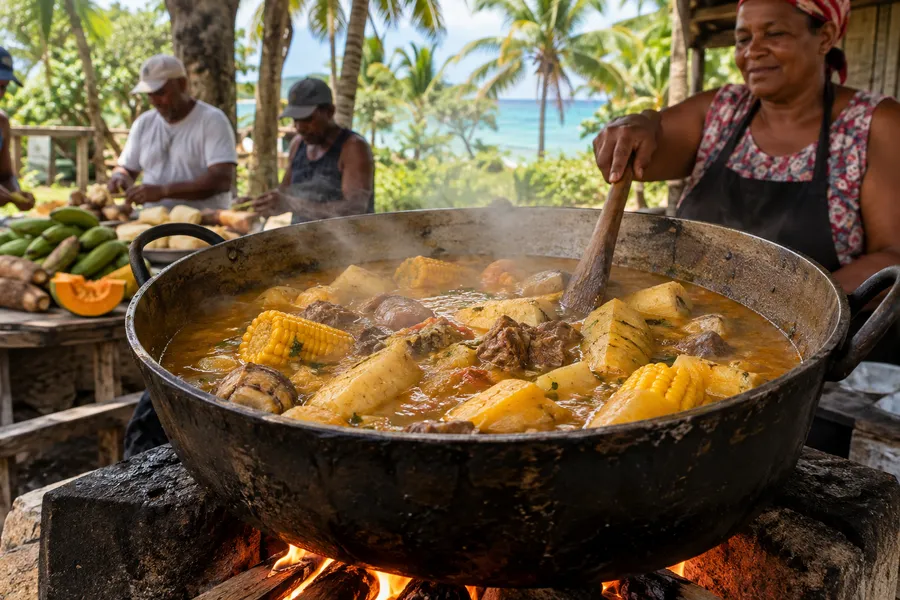
Olla de sancocho tradicional dominicano

Sancocho y Celebración

Cumpleaños, bodas, reuniones familiares: casi siempre hay sancocho. Se hace en cantidad para alimentar a muchas personas. Es generosidad expresada en caldero.

Sancocho en Nuestro Retiro

Una de nuestras tradiciones es preparar sancocho auténtico cocinado a leña, después de intensas sesiones de baile. No es solo nutrición; es iniciar a los participantes en un rito cultural genuino. Muchos viajeros dicen que el sancocho que comieron en nuestro retiro fue transformador.
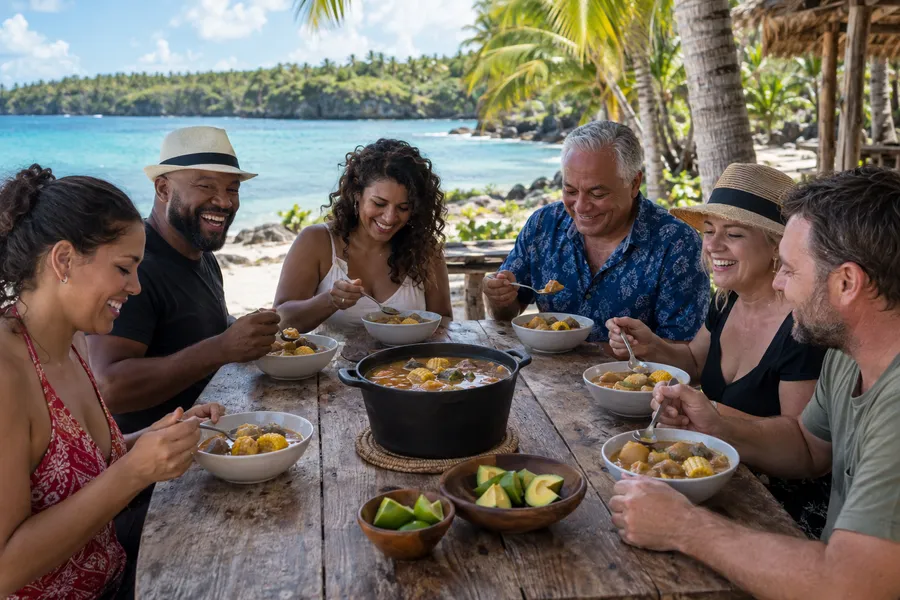
Familia compartiendo sancocho tradicional

Receta Básica (Para Ti)

Si quieres intentar en casa: carne (2 lb), 3 plátanos verdes, 2 yucas, 3 ñames, 3 papas, cebolla, ajo, sal, pimienta. Cocina la carne primero, luego agrega tubérculos. Cocina hasta que estén suaves (1.5-2 horas). ¡Es simple pero requiere paciencia!

Keep reading: How to dance at a Dominican colmado · Experiencing authentic Dominican culture

Vive Esta Tradición

Come sancocho auténtico, compartido con personas que amas, en el mismo lugar donde nació. Es experiencia que no olvidas.
The Importance of Sancocho in Dominican Culture

It's not just a dish. Sancocho is ritual, community, and the way Dominicans say "I love you" through food and shared time.

When a Dominican invites you to a sancocho, they're not inviting you to dinner. They're inviting you into their life. It's the most inclusive act in Caribbean culture.

What Is Sancocho?

Sancocho is a thick, generous stew made with meat (chicken, beef, or fish), green plantains, yuca, ñame, potatoes, and other root vegetables. It cooks slowly in a large pot for hours, the steam rising and the aroma spreading through the neighborhood. The result is a rich, warming broth that feeds body and soul in equal measure.

History and Roots

Sancocho carries the DNA of three cultures: African, Spanish, and indigenous Taíno. It began as food of necessity — slaves and laborers making something nourishing from what was available — and became a symbol of resilience and unity. Today it represents Dominican identity itself: mixture, abundance, community.

More Than Food: It's Community

Making sancocho is a collective act. Multiple people peel plantains, chop root vegetables, tend the fire. While it cooks, people talk, laugh, and simply exist together. When it's served, it goes into deep bowls, often shared around a table where everyone eats from the same pot. There's something almost sacred about that.

Traditional Dominican sancocho pot

Sancocho and Celebration

Birthdays, weddings, family gatherings — sancocho is almost always there. It's made in large quantities because the point is feeding everyone who shows up. Generosity expressed in a caldero. You don't make a small sancocho; that would miss the point entirely.

Sancocho at Our Retreat

One of our most beloved traditions is preparing authentic sancocho cooked over wood fire after an intense day of dancing. It's not just nutrition — it's an initiation into a genuine cultural ritual. Many travelers say the sancocho they shared at our retreat was one of the most meaningful meals of their lives. Not because of the ingredients, but because of what surrounded it.

Family sharing traditional sancocho together

A Basic Recipe (To Try at Home)

If you want to attempt it: 2 lbs of meat, 3 green plantains, 2 yucas, 3 ñames, 3 potatoes, onion, garlic, salt, pepper. Cook the meat first, then add the root vegetables. Simmer until everything is tender — about 1.5 to 2 hours. Simple in ingredients, but it requires patience. The patience is part of the tradition.

Keep reading: How to dance at a Dominican colmado · Experiencing authentic Dominican culture

Live This Tradition

Eat authentic sancocho, shared with people you've just become close to, in the very place it was born. It's an experience you don't forget.

Die Bedeutung des Sancocho in der dominikanischen Kultur

Es ist nicht nur ein Gericht. Sancocho ist Ritual, Gemeinschaft und die Art, wie Dominikaner durch Essen und gemeinsame Zeit "Ich liebe dich" sagen. Wenn du zu einem sancocho eingeladen wirst, wirst du in jemandes Leben eingeladen.

Wenn ein Dominikaner dich zu einem sancocho einlädt, lädt er dich nicht zum Abendessen ein. Er lädt dich in sein Leben ein. Es ist der inklusivste Akt der karibischen Kultur.

Was ist Sancocho?

Sancocho ist ein dicker, großzügiger Eintopf aus Fleisch (Huhn, Rind oder Fisch), grünen Kochbananen, Yuca, Ñame, Kartoffeln und anderen Wurzelgemüsen. Er kocht stundenlang langsam in einem großen Topf, der Dampf steigt auf und das Aroma zieht durch die Nachbarschaft. Das Ergebnis ist eine reiche, wärmende Brühe, die Körper und Seele gleichermaßen nährt.

Geschichte und Wurzeln

Sancocho trägt die DNA dreier Kulturen in sich: afrikanische, spanische und die der indigenen Taíno. Er entstand als Essen der Notwendigkeit — Sklaven und Arbeiter, die aus dem, was vorhanden war, etwas Nahrhaftes zubereiteten — und wurde zu einem Symbol der Widerstandskraft und Einheit. Heute steht er für die dominikanische Identität selbst: Mischung, Fülle, Gemeinschaft.

Mehr als Essen: Es ist Gemeinschaft

Sancocho zu kochen ist ein kollektiver Akt. Mehrere Menschen schälen Kochbananen, schneiden Wurzelgemüse, hüten das Feuer. Während er kocht, reden, lachen und existieren die Menschen einfach zusammen. Wenn er serviert wird, kommt er in tiefe Schüsseln — oft geteilt an einem Tisch, wo alle aus demselben Topf essen. Darin liegt etwas fast Heiliges.

Traditioneller dominikanischer Sancocho-Topf

Sancocho und Feier

Geburtstage, Hochzeiten, Familientreffen — sancocho ist fast immer dabei. Er wird in großen Mengen gekocht, weil es darum geht, alle zu sättigen, die auftauchen. Großzügigkeit, ausgedrückt im Caldero. Man macht keinen kleinen sancocho; das würde den Sinn verfehlen.

Sancocho bei unserem Retreat

Eine unserer beliebtesten Traditionen ist die Zubereitung von authentischem sancocho über Holzfeuer nach einem intensiven Tanztag. Es geht nicht nur ums Essen — es ist eine Einführung in ein echtes kulturelles Ritual. Viele Reisende sagen, der sancocho bei unserem Retreat war eine der bedeutungsvollsten Mahlzeiten ihres Lebens. Nicht wegen der Zutaten, sondern wegen dem, was sie umgab.

Familie teilt gemeinsam traditionellen sancocho

Ein einfaches Rezept (zum Zuhause ausprobieren)

Wenn du es versuchen möchtest: 900 g Fleisch, 3 grüne Kochbananen, 2 Yucas, 3 Ñames, 3 Kartoffeln, Zwiebel, Knoblauch, Salz, Pfeffer. Zuerst das Fleisch kochen, dann das Wurzelgemüse dazugeben. Köcheln lassen, bis alles weich ist — etwa 1,5 bis 2 Stunden. Einfach in den Zutaten, aber es braucht Geduld. Die Geduld ist Teil der Tradition.

Weiterlesen: Wie man in einem dominikanischen colmado tanzt · Authentische dominikanische Kultur erleben

Leb diese Tradition

Iss authentischen sancocho, geteilt mit Menschen, denen du gerade nähergekommen bist, genau dort, wo er entstanden ist. Ein Erlebnis, das man nicht vergisst.